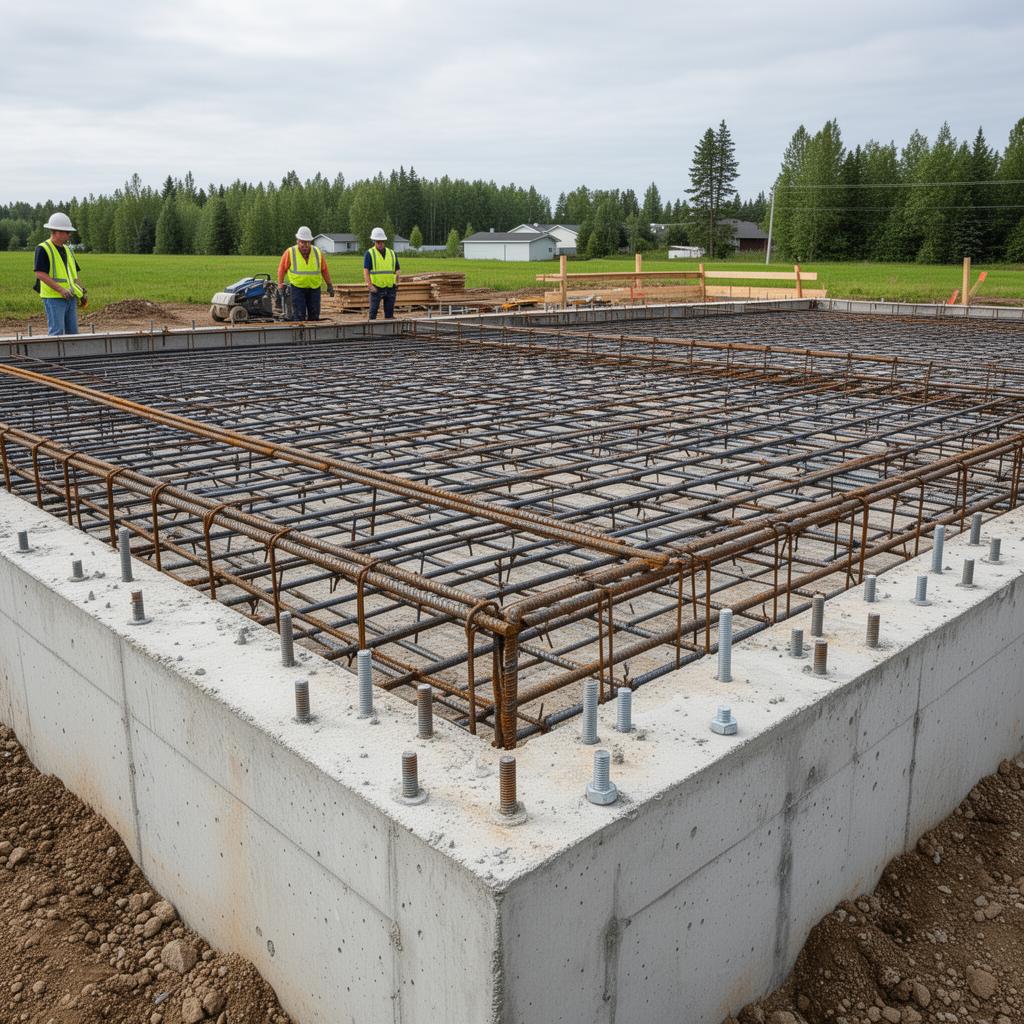
The Slab Is Permanent
When you pour a barndominium slab, every decision is locked in concrete — literally. Plumbing rough-ins, radiant heat loops, electrical conduit runs, and anchor bolt placements all become permanent the moment the concrete sets.
Unlike a conventional home with a basement or crawlspace, there's no going back under a slab-on-grade foundation. If a drain line is 6 inches off, you're cutting concrete. If a radiant loop is too close to an exterior wall, you're losing heat to the ground. If anchor bolts don't match your post-frame layout, you're shimming for the life of the building.
The 5 Most Expensive Slab Mistakes
1. Pouring Before Mechanical Plans Are Final
This is the single most expensive mistake in barndominium construction. Builders pour the slab based on the floor plan alone, without finalizing:
- Plumbing rough-in locations for kitchen, bathrooms, and laundry
- Radiant heat loop zones and manifold placement
- Electrical conduit for floor outlets and future EV charging
- Anchor bolt patterns for the post-frame or steel structure
Cost to fix after the pour: $5,000–$15,000+
2. Skipping the Vapor Barrier
Metal buildings trap moisture differently than wood-frame homes. Without a proper vapor barrier under the slab, moisture migrates upward and causes:
- Flooring adhesive failure
- Mold growth under vinyl or laminate
- Efflorescence (white mineral deposits) on concrete surfaces
Cost to fix: $3,000–$8,000 for flooring replacement
3. Wrong Slab Thickness for Shop Areas
If your barndominium includes a shop area with vehicle lifts, heavy equipment, or stored materials, the slab needs to be thicker (typically 6"+ with reinforced rebar) in those zones. A standard 4" residential slab will crack under heavy loads.
Cost to fix: Can't be fixed — requires demolition and re-pour
4. No Thermal Break at the Perimeter
Without rigid foam insulation around the slab perimeter, heat from radiant floor systems bleeds directly into the ground at the edges. This is especially critical in Canadian climates where frost penetration is deep.
Cost to fix: $2,000–$5,000 in annual heating losses
5. Ignoring Drainage Engineering
Rural properties often have unique drainage challenges — high water tables, clay soils, seasonal runoff. Without proper grading and subsurface drainage around the slab, water intrusion becomes a chronic problem.
Cost to fix: $5,000–$20,000 for exterior drainage retrofit
How to Prevent These Mistakes
The solution is simple in concept but requires discipline: plan all mechanical systems before you pour.
IronField's pre-pour checklist walks you through every embedded system — plumbing, radiant, electrical, structural — in the order decisions need to be made. It's the same framework used on real barndominium builds to prevent exactly these mistakes.
Every item in the IronField checklist exists because someone, somewhere, learned the hard way.
If you already have floor plans drawn up, a design review can catch mechanical conflicts like these before they're locked into the plans your contractor pours from — often for less than the cost of one of these mistakes.