Why a Barndominium Needs to Think About CO Differently Than a Typical House
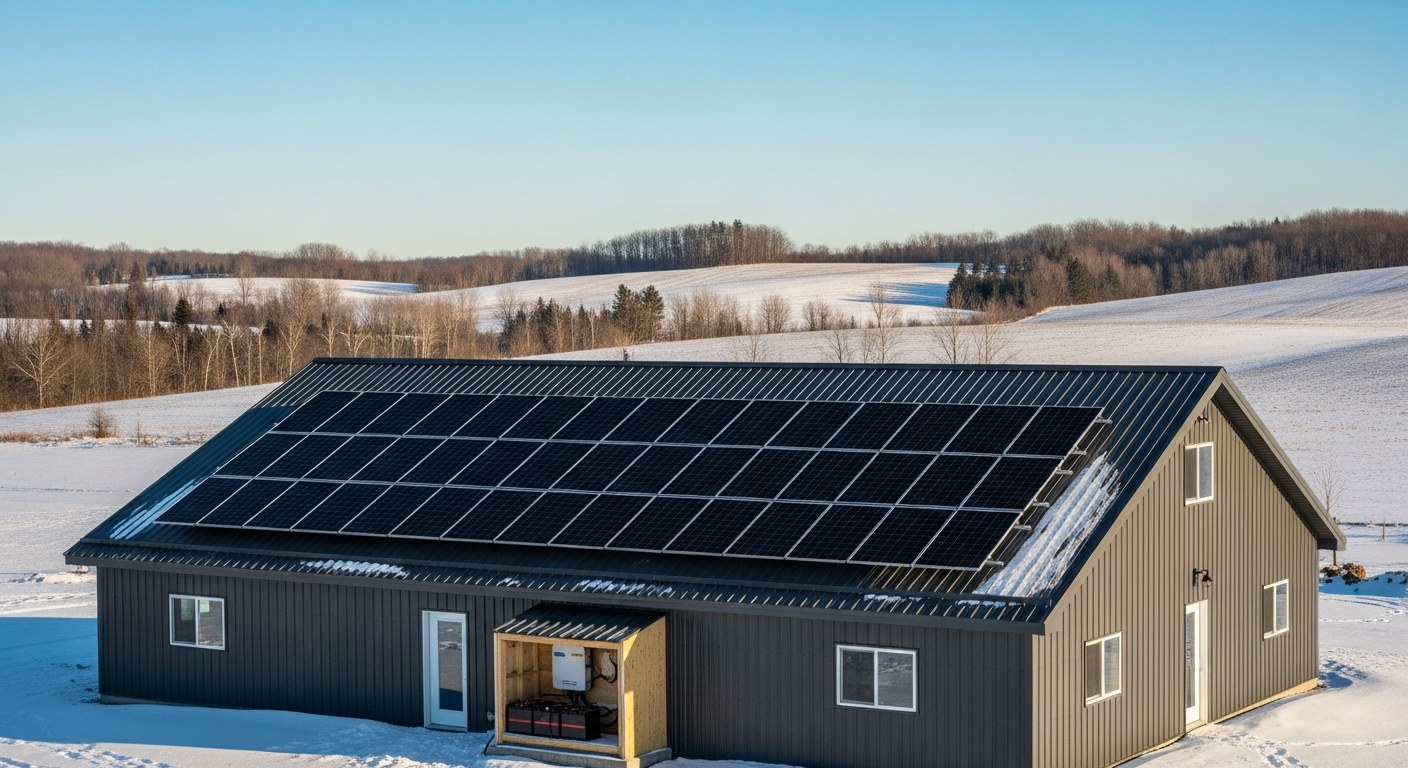
Most homes need smoke and CO detectors near bedrooms and combustion appliances, full stop. A barndominium usually has an extra CO source a typical subdivision house doesn't: a shop bay where a vehicle, generator, propane heater, or gas-powered tool might run, often sharing airspace — or at least a wall — with the living quarters. That changes both where you need detection and how seriously you should take it.
Two Different Jobs: Living Space vs. Shop Zone
Living space — code requires interconnected smoke and CO detection near sleeping areas in most Canadian jurisdictions. A hardwired combination unit like the First Alert SC9120BCA with battery backup covers this reliably, and interconnected units mean an alarm anywhere in the house triggers all of them.
Shop zone — if your shop bay has any combustion source (a vehicle running briefly, a propane heater, a generator during an outage), it needs its own CO detection, separate from the house system. A plug-in unit with a digital ppm readout works well here because it shows you the actual concentration trend, not just a binary alarm — useful for catching a slow buildup before it hits alarm threshold. For a Wi-Fi-connected option that sends a phone alert even when you're not in the shop, a smart battery unit is worth the extra cost.
Why This Matters More on a Barndominium
CO is odorless and invisible, and a large open shop bay doesn't behave like a small enclosed garage — it can hold a surprisingly large volume of contaminated air before anyone notices a problem, especially if ventilation is passive rather than mechanical (see our note on shop ventilation fans). If your shop and living space share any airflow path — a connecting door, shared HVAC returns, or just imperfect air-sealing between zones — a CO event in the shop is a CO event in the house.
What to Actually Check
- Placement: CO detectors work best at roughly breathing height, not on the ceiling (CO mixes with air rather than reliably rising like heat/smoke does) — follow the manufacturer's specific placement guidance, which varies by model.
- Interconnection: for the living-space units, confirm they're genuinely interconnected (wired or wirelessly) so one alarm triggers all of them — a single isolated unit in a large open floor plan may not be heard from every room.
- Digital display vs. alarm-only: a display that shows ppm concentration lets you see a slow upward trend before it hits the alarm threshold, which alarm-only units can't do.
One Honest Limitation
CO detectors have a service life — typically 5-10 years depending on the model — after which the sensor itself degrades even if the unit still powers on. Check the manufacture date sticker, not just whether it beeps when tested, and replace on schedule.
Where to Buy
First Alert SC9120BCA Hardwire Combo Alarm · First Alert CO615A Plug-In Alarm · First Alert SC5 Smart Alarm
As an Amazon Associate, IronField earns from qualifying purchases — the price you pay doesn't change. This is general planning information, not a substitute for your local building code's specific CO detection requirements — verify with your building department.
CO detection is one line item among hundreds — see the full pre-pour checklist for shop and mechanical safety planning.