
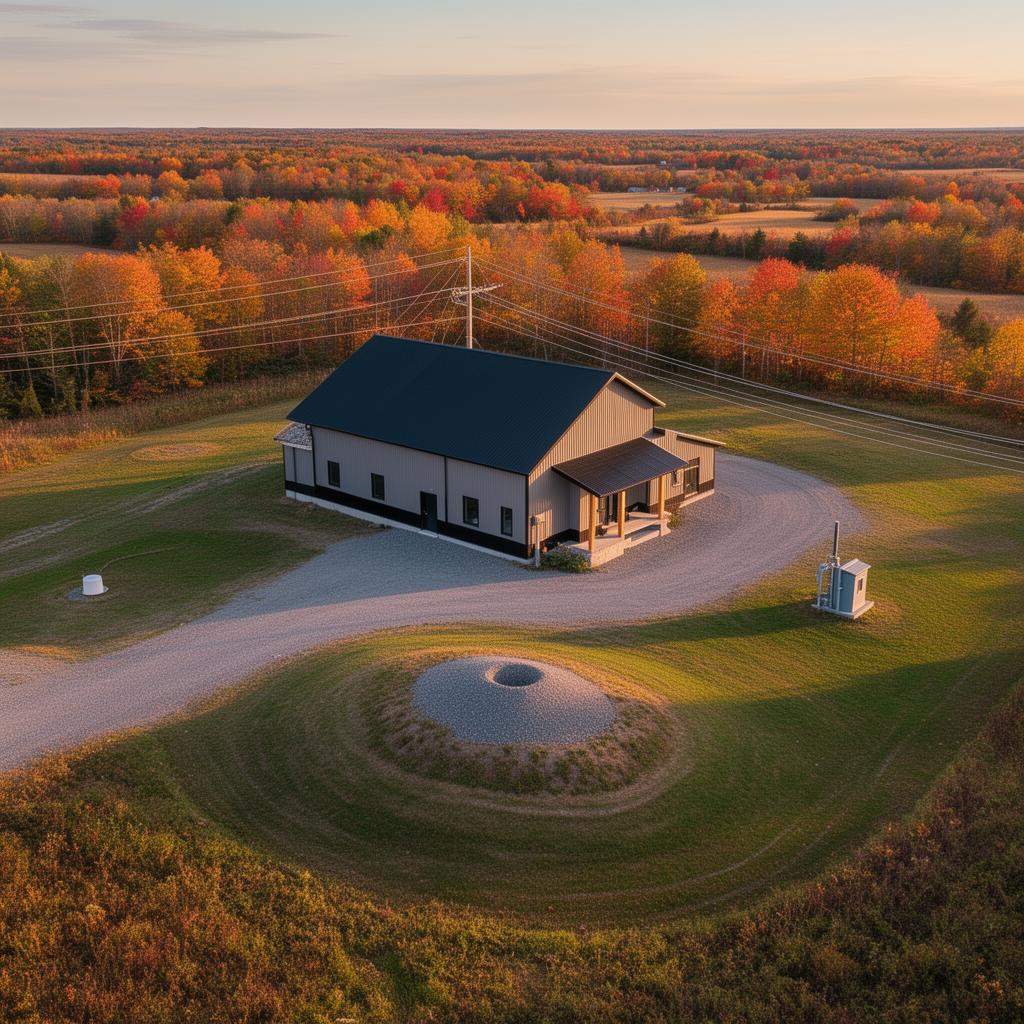
Rural Property Due Diligence: 15 Things to Verify Before Buying Land for a Barndominium
The most expensive mistake in barndominium construction doesn't happen during the build. It happens before you buy the land.
Rural properties present risks that suburban lot buyers never encounter — inadequate well yield, restrictive zoning, insufficient hydro service, poor soil conditions, and access limitations that can add $50,000+ to your project or kill it entirely.
1. Zoning and Land Use Designation
Check current zoning designation, permitted uses, whether mixed-use residential is permitted, and whether variance/rezoning is required.
2. Official Plan Designation
Check whether the Official Plan designation supports residential development.
3. Well Water — Yield, Quality, and Depth
Minimum 3 GPM yield. Test for bacteria, nitrates, hardness, iron, manganese, sodium, fluoride. New well costs $5,000–$25,000+.
4. Septic System Suitability
Verify perc test results, setback distances, seasonal water table height. Conventional: $10K–$18K. Raised bed: $20K–$35K. Tertiary: $25K–$45K.
5. Hydro (Electrical) Service Availability
Check distance from utility pole, single-phase vs three-phase, cost of new service connection ($0 to $50,000+), transformer capacity.
6. Road Access and Municipal Standards
Verify public vs private road, year-round access, entrance permit, road occupancy permit.
7. Natural Heritage and Environmental Constraints
Check for wetlands, flood plains, endangered species habitat, source water protection areas.
8. Soil Conditions and Bearing Capacity
Geotechnical investigation ($3,000–$8,000) confirms soil type, bearing capacity, water table depth, frost depth.
9. Survey and Property Boundaries
Always get a current survey ($2,000–$5,000). Rural boundaries are frequently unclear.
10. Building Setback Requirements
Front: 15–25m. Side: 3–10m. Rear: 7.5–15m. Water bodies: 30m+.
11. Internet and Communications
Check fibre, fixed wireless, Starlink, LTE/5G availability.
12. Property Tax Assessment
Request current MPAC assessment. Check for farm tax class (75% reduction in Ontario).
13. Mineral and Timber Rights
Verify whether mineral rights convey with the property.
14. Heritage Designations
Check for heritage designations that restrict construction.
15. Title Search and Encumbrances
Title search ($500–$1,500) reveals easements, liens, restrictive covenants, rights-of-way.
The Due Diligence Timeline
Allow 4–8 weeks. Make your offer conditional on satisfactory results.
The land is the foundation of your entire project. Skipping due diligence can result in $50,000–$100,000 in unexpected expenses.
This article references provincial legislation, federal databases, and industry resources.
Once your land clears due diligence, find a vetted barndominium builder who can actually build on it.