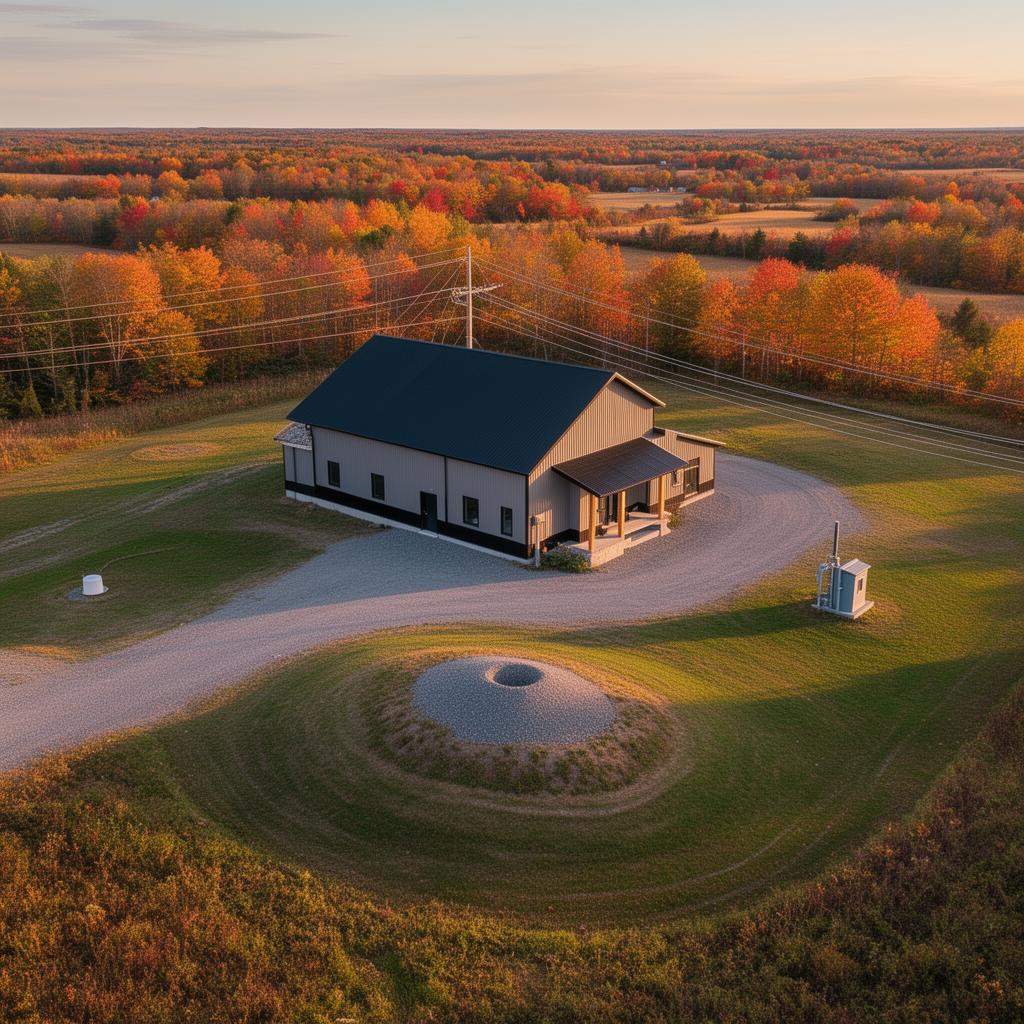
Why Well Sizing Matters More for Barndominiums
A standard rural home draws 5–10 GPM for daily use. A barndominium with a shop wash bay, radiant floor heating makeup water, and three bathrooms can demand 15–25 GPM at peak. If your well and pump can't deliver, you get pressure drops, cycling pumps, and premature equipment failure.
Understanding GPM: How Much Water Do You Actually Need?
Calculate your peak demand by adding simultaneous fixtures:
- Shower: 2.5 GPM each
- Kitchen faucet: 2.0 GPM
- Dishwasher: 2.0 GPM
- Washing machine: 3.0 GPM
- Toilet flush: 3.0 GPM (tank refill)
- Shop wash bay: 5.0–8.0 GPM
- Radiant system makeup: 1.0 GPM (intermittent)
- Outdoor hose bib: 5.0 GPM
Peak scenario: Two showers running + dishwasher + washing machine + shop wash bay = 17.5 GPM minimum
Well Yield vs. Pump Capacity
Your well has a natural yield — the rate groundwater flows into the bore. This is measured during drilling and pump testing.
- 5 GPM yield: Marginal for a barndominium. Requires a large storage/pressure tank system
- 10 GPM yield: Adequate for residential use with moderate shop demand
- 15+ GPM yield: Comfortable for full barndominium use including shop bays
Critical: Your pump capacity should match your well yield, not exceed it. Over-pumping draws the water level below the pump intake, causing cavitation and premature failure.
Pressure Tank Sizing
The pressure tank is your buffer. It prevents the pump from short-cycling (turning on/off rapidly), which destroys pump motors.
- Minimum for barndominiums: 85-gallon pressure tank (drawdown capacity ~25 gallons)
- Recommended: 119-gallon tank for builds with shop bays
- With low-yield well (<7 GPM): Consider a 200+ gallon storage tank with a booster pump system
Pressure Settings
- Standard: 40/60 PSI (pump on at 40, off at 60)
- For radiant systems: Confirm your boiler's minimum inlet pressure — most need 15–20 PSI minimum
- For shop equipment: Pressure washers may need 40 PSI minimum inlet
The Slab Decisions You Must Lock In
Before the pour, these well-related items need to be finalized:
- Water service entry point: Where the supply line penetrates the slab. This must align with your mechanical room layout
- Pressure tank location: These are heavy — plan the slab for the load and access
- Water treatment location: If you need a softener, iron filter, or UV system, plan the space and drain
- Manifold location: PEX home-run systems need a central manifold near the pressure tank
- Floor drain: Required near the pressure tank and water treatment for maintenance and overflow
Common Rural Well Mistakes
- Not testing well yield before building: Drill and test first. A 2 GPM well changes your entire plumbing strategy
- Undersized pressure tank: A 40-gallon tank with a 10 GPM pump means the pump cycles every 2 minutes under load
- No water treatment plan: Rural wells frequently have iron, manganese, or hardness issues. Plan the equipment space before the pour
- Missing backup power: Your well pump needs electricity. No generator plan means no water during outages
- Single supply line: Run a spare conduit alongside your water line for future use (irrigation, outbuilding supply)
Well Pump Maintenance, Priming, and Knowing When to Call It
Even a correctly sized well pump needs upkeep, and rural buyers who've never owned a well before are often caught off guard by what "normal" actually looks like.
What the Control Box Does
On a 3-wire submersible pump, the control box (mounted at the pressure tank, not down the well) houses the start/run capacitors and relay that get the motor spinning. It's a separate, serviceable part from the pump itself — a control box failure can look exactly like a dead pump (no water, no pressure) but costs a fraction as much to fix, since nothing has to come out of the well.
Priming (Jet Pumps Only)
Submersible pumps never need priming — they're already underwater. Priming only applies to shallow-well jet pumps mounted above ground: the pump housing and suction line have to be filled with water before startup, or the pump runs dry and can burn out the motor within minutes. A jet pump that loses its prime after a power outage or a line break is one of the most common "my pump won't build pressure" service calls.
How Long a Well Pump Actually Lasts
Most submersible well pumps run 8–15 years with normal use, though sediment, iron content, and how often the pump cycles all affect lifespan more than age alone. Warning signs it's nearing the end: cycling noticeably more often than it used to, sediment showing up in the water, pressure that never quite reaches the set point, or a motor that hums without actually pumping.
Repair or Replace?
- Pressure switch failure — usually a $30–50 part and a quick fix. Almost always worth repairing rather than replacing the pump.
- Control box/capacitor failure — repairable, moderate cost, no need to pull the pump.
- Motor or impeller failure at year 10+ — pulling a submersible pump is most of the labor cost regardless of what's wrong with it, so at that age it's often cheaper to replace the whole unit than repair and re-install the old one.
- If your household demand has changed since the original install (added a shop bay, finished a basement, added bathrooms) — a failure is the natural moment to resize the replacement rather than matching the old pump like-for-like.
Basic Annual Maintenance
- Check the pressure tank's air charge with the tank drained down — it should read a few PSI below your pump's cut-in pressure.
- Look at the pressure switch contacts for corrosion or pitting.
- If output noticeably drops without any obvious equipment fault, consider a well flow re-test — it's possible to have a healthy pump on a well whose actual yield has declined.
Pre-Pour Well Checklist
- Well drilled, tested, and yield documented
- Pump sized to match well yield (not exceed it)
- Pressure tank sized for peak demand (85 gal minimum)
- Water service entry penetration located and sleeved
- Treatment equipment space planned with drain access
- Electrical circuit for well pump on dedicated breaker
- Generator transfer switch includes well pump circuit
Bottom line: Your well system is the single point of failure for a rural build. Unlike city water, there's no backup supply. Size the pump correctly, plan the pressure tank for your actual demand, and get the slab penetrations right before concrete day.
Well and mechanical systems need to be sized together, not separately — get matched with a vetted builder who'll coordinate both.