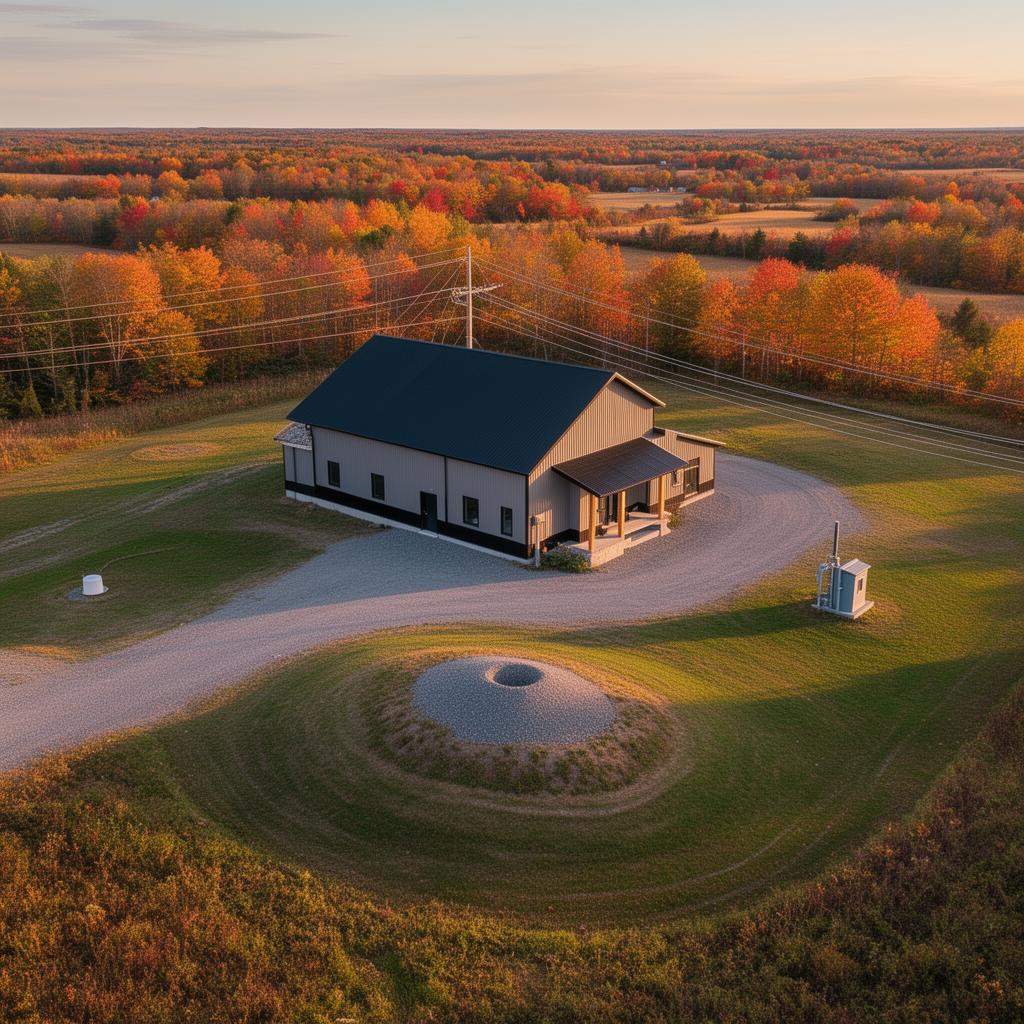
Why Septic Planning Comes First, Not Last
Most barndominium builders treat septic as an afterthought — something the plumber handles after the slab is poured. This is exactly backwards. Your septic system determines:
- Where your building can sit on the lot (setback requirements from the drain field)
- How many bathrooms you can realistically support
- Whether your dream floor plan is even legal on your specific soil type
Get this wrong and you're either moving your building pad, cutting bathrooms, or spending $30,000+ on an engineered septic system that a conventional system would have handled — if you'd tested the soil first.
The Perc Test: Do This Before You Buy the Land
A percolation test measures how fast water drains through your soil. It's the single most important data point for rural builds.
- Schedule early: Perc tests must happen when soil conditions are representative — not frozen, not saturated from recent rain
- Test multiple spots: Your preferred building location might have great soil, but the drain field area 100 feet away might not. Test both
- What you want: Sandy loam or loamy sand with perc rates between 1-60 minutes per inch. Faster than 1 min/inch means the soil won't filter effluent. Slower than 60 means you may need an engineered system
- Cost: $500-$1,500 depending on your county and number of test holes
Setback Requirements That Shrink Your Buildable Area
Every county has setback rules that dictate minimum distances between septic components and other features. These eat into your usable lot faster than most people expect:
- Septic tank to building: 10-25 feet (varies by jurisdiction)
- Drain field to building: 20-50 feet
- Drain field to well: 50-100 feet (this is the big one)
- Drain field to property line: 10-25 feet
- Drain field to surface water: 50-100 feet
On a 5-acre lot, these setbacks can eliminate half your buildable area. On 2 acres with a well, you might have only one viable building pad.
Septic Sizing for Barndominiums
Septic systems are sized by number of bedrooms, not bathrooms or square footage. This matters for barndominiums because:
- A 2-bedroom barndominium with a 1,500 sq ft shop gets the same base septic size as a 2-bedroom cottage
- Most counties require a minimum 1,000-gallon tank for 1-3 bedrooms
- Each additional bedroom adds 250-500 gallons of required tank capacity
- Plan ahead: If you might add a bedroom later, size the tank and drain field for it now. Upsizing later means excavating your yard
Conventional vs. Engineered Systems
- Conventional gravity system: $5,000-$15,000 installed. Works when soil percs well and you have adequate slope. This is what you want
- Pressure distribution: $10,000-$20,000. Required when the drain field is uphill from the tank or soil is marginal
- Mound system: $15,000-$30,000. Built above grade when water table is high or bedrock is shallow. Common in Northern climates
- Aerobic treatment unit (ATU): $15,000-$25,000. Required when lot size is too small for a conventional drain field. Has ongoing maintenance costs ($200-$400/year)
How Much Does a Septic System Actually Cost?
The system-type breakdown above covers install pricing, but "how much does a septic system cost" also comes up for repair and full replacement — and those are different numbers than a new install.
- New installation: $5,000–$30,000 depending on system type (see the conventional-vs-engineered breakdown above) — soil conditions, not house size, are the biggest cost driver.
- Minor repair: $150–$500 for things like an effluent filter cleaning, a clogged inlet baffle, or a lid/riser repair.
- Component repair: $500–$3,000 for a failed pump (aerobic and mound systems both rely on pumps), a distribution box swap, or line repair.
- Drain field rehabilitation or replacement: $3,000–$10,000+ — usually close to new-install pricing, because a failed drain field almost always means re-excavating rather than a simple fix.
- Full system replacement: Effectively the same range as a new install, since replacing a system means starting over on tank and drain field sizing — this is why a passing perc test and a spare replacement area (both covered below) matter as much for an aging system as a new build.
The honest reason "how much does a septic system cost" doesn't have one answer: two lots with identical house plans can have completely different septic costs based on soil percolation rate alone — a $6,000 conventional system on one lot can become a $25,000 engineered system on the lot next door with poor-draining soil. That's why the perc test above comes before any cost estimate is worth trusting.
Pre-Build Septic Checklist
- Perc test completed with passing results in the planned drain field area
- County septic permit application submitted with site plan showing all setbacks
- Septic designer has confirmed tank and drain field locations don't conflict with your building pad, driveway, or future outbuildings
- Well location finalized with required separation from drain field
- Spare drain field area identified (most counties require a 100% replacement area)
- Confirm no easements, buried utilities, or drainage swales cross the planned drain field
The cost of getting septic wrong isn't just money — it's your entire site plan. A $500 perc test before you buy the land can save you $20,000 in engineered system costs and months of permit delays after.
Septic design needs to be coordinated with your builder, not bolted on after — get matched with a vetted contractor who'll plan it with the rest of your systems.