The Failure Mode Nobody Plans For: Pump Works Fine, Power Doesn't
A sump pump only has one job, and it only fails in one way that actually matters: it can't run without power. The problem is that the exact conditions that raise groundwater and trigger heavy sump-pump cycling — a spring thaw, a multi-day rainstorm — are also the conditions most likely to knock out rural power. A pump that works perfectly all year can still let your utility room flood the one week you actually needed it, if that week comes with an outage.
What a Battery Backup System Actually Adds
A battery backup sump system isn't a replacement pump — it's a second pump, plumbed into the same discharge line, powered by a deep-cycle battery instead of your home's electrical panel. When your primary pump loses power (or fails outright, or can't keep up with an unusually high inflow), the backup pump kicks in automatically and keeps draining the pit.
Two real products worth knowing:
- WAYNE WSS30V — a pre-assembled 1/2 HP primary pump plus a 12V battery-backup pump in one combination unit, a straightforward option for a new install.
- Zoeller Aquanot Spin 508 — a self-testing battery-backup system (it periodically tests itself and alarms if something's wrong) that adds onto an existing primary pump rather than replacing it.
Why This Matters More on a Barndominium
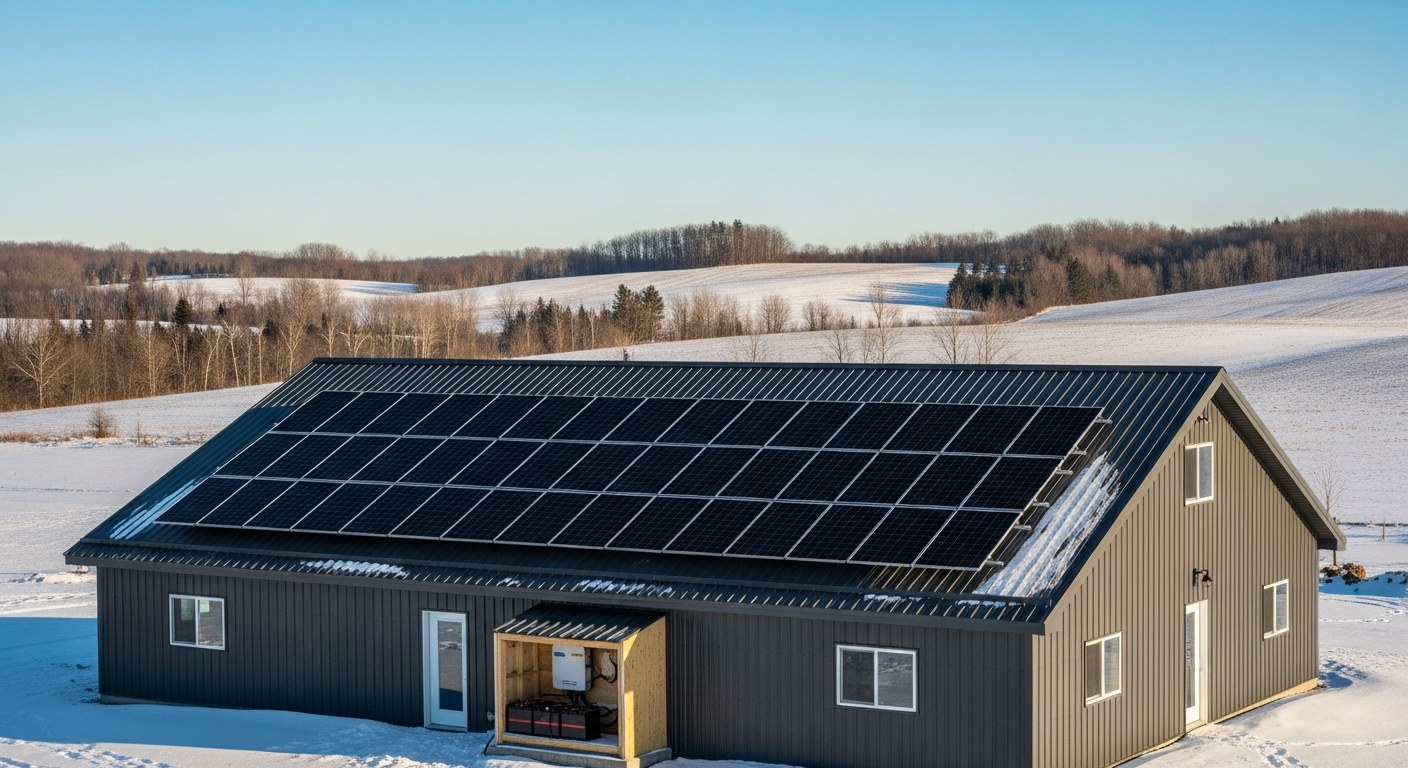
Rural properties on well and septic systems tend to see more frequent and longer power outages than urban/suburban grids, simply due to longer feeder lines and lower restoration priority. A slab-on-grade barndominium with a below-grade sump pit in the utility room is exactly the layout where a flooded pit means water finding its way across a large open floor plan — not contained to one small basement room like in a lot of traditional homes.
If your build already has (or is planning) a whole-home backup generator, that covers the same failure mode for as long as the generator has fuel — but a battery backup system covers the gap between "power goes out" and "generator kicks in or someone gets home to start it," and keeps working even if the generator itself has an issue.
What to Check Before You Buy
- Battery type and runtime: most battery-backup sump systems use a deep-cycle marine or AGM battery (sold separately in many kits) — runtime depends on how often the pump has to cycle, not just battery size.
- Pump capacity (GPM): make sure the backup pump's gallons-per-minute rating is adequate for your actual sump pit inflow rate, not just "any backup pump."
- Self-testing: systems that self-test and alarm on a fault (like the Zoeller Aquanot) catch a dead battery before you need it, rather than after.
One Honest Limitation
A battery backup buys you hours to a day or two of protection during an outage, not indefinite runtime — it's not a substitute for a generator if you expect multi-day outages. Check the battery on a schedule (most systems make this easy with a self-test light), since a backup system with a dead battery gives you false confidence.
Where to Buy
WAYNE WSS30V Combination Sump System · Zoeller Aquanot Spin 508
As an Amazon Associate, IronField earns from qualifying purchases — the price you pay doesn't change.